Source industrial data center iec pdu for Commercial, Industrial, Hospital
Find 30 verified industrial data center iec pdu options with varying certifications, voltage ratings, and mounting modes. Buyers can compare specifications like IP ratings, cable lengths, and smart features for commercial, industrial, and hospital applications.
Key considerations
Products List




Data Center in a Box Modular Data Centers Data Center Containment Solutions
$10000.00 - $50000.00
Moq: 1


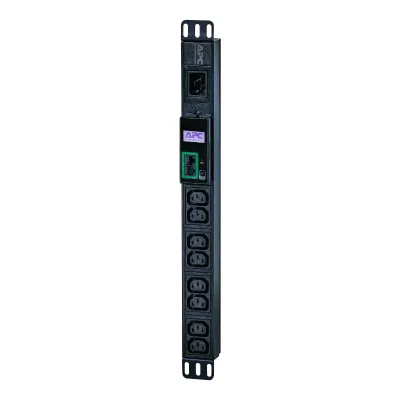
Intelligent Power Distribution Unit PDU for High Power Demand Ai Data Center
$1000.00 - $3500.00
Moq: 5


Comprehensive Sourcing Guide
Strategic Sourcing Guide for Industrial Data Center IEC PDUs
Understanding Technical Specifications and Configuration
When sourcing an Industrial Data Center IEC PDU (Power Distribution Unit), buyers must first establish a precise understanding of the technical specifications that define the unit's compatibility and performance. The core of this selection process involves matching the PDU's electrical ratings to the specific infrastructure of the data center. Based on observed market data, these units frequently feature a rated voltage of 250VAC or 400V, with specific models supporting input voltages ranging from 200V to 230V. The rated current is a critical parameter, with common configurations supporting 16 Amperes, though high-capacity units may vary.
The physical form factor is equally significant for rack integration. The majority of industrial-grade units are designed as 1U Rack-mounted devices, optimized for horizontal mounting positions to maximize space efficiency within standard server racks. The cable length is another variable that requires careful verification; observed specifications indicate standard cord lengths of 2 meters, with some models offering customized lengths of 1.5, 1.8, or 2.5 meters. The input plug type is strictly governed by international standards, with IEC 60320 C20 being a prevalent standard for high-current applications, ensuring a secure connection to the upstream power source.
Furthermore, the internal architecture of the PDU often includes advanced monitoring capabilities. Modern units may feature an LCD display, typically a 2.8-inch screen, to provide real-time visibility into power consumption. Connectivity options are expanding, with many models integrating Ethernet ports for network connection and remote access, alongside USB ports for software upgrades. For environments requiring complex monitoring, support for SNMP (Simple Network Management Protocol) versions V1, V2c, and V3 is essential. Additional features may include RS485 ports for cascade parameter configuration, allowing for the management of multiple PDUs in a daisy-chain fashion, and specialized ports for temperature and humidity sensors or switch inputs supporting water immersion and door access control.
Compliance and Certification Verification
In the industrial sector, compliance is not merely a formality but a prerequisite for operational safety and legal liability. Buyers must rigorously verify that the PDU carries the necessary certifications for the target market. The observed product landscape includes units certified under the CCC (China Compulsory Certification), CE (Conformité Européenne), RoHS (Restriction of Hazardous Substances), and ISO standards. Specific models have been observed with ETL certification, which is often required for North American markets.
The adherence to international electrical standards is paramount. The IEC Standard is frequently cited as the governing framework for these devices, ensuring that the design meets global safety and performance benchmarks. While general background knowledge suggests standards like IEC 62368 or ISO 9001, buyers should prioritize the explicit certification status listed on the product datasheet rather than assuming compliance based on general industry knowledge. The condition of the product is also a critical verification point; all observed units in this category are listed as "New," which implies they have not been refurbished and should meet original manufacturing tolerances.
Buyers should also scrutinize the material composition, as this impacts durability and safety. Aluminum Alloy is a common material for the shell and casing of these PDUs, offering a balance of lightweight properties and robust heat dissipation. The IP Rating, while often associated with environmental sealing, in this context is linked to the shell material and construction quality. Verifying that the product meets the specific "Condition: New" and "Industrial" application criteria ensures that the unit is suitable for the harsh environments typical of data centers.
Cost Drivers and Pricing Dynamics
The pricing of industrial IEC PDUs is influenced by a complex interplay of technical specifications, customization levels, and supply chain factors. The observed price range in the market is vast, spanning from 5 USD to 50,000 USD. This wide disparity is not indicative of a single product type but rather reflects the spectrum from basic passive distribution units to highly sophisticated metered and monitored systems. A basic PDU with standard grounding and a fixed cable length will occupy the lower end of this spectrum, while a unit featuring an LCD display, remote network access, SNMP support, and custom cable lengths will command a significantly higher price.
Customization is a primary cost driver. The availability of custom options, such as specific cable lengths, unique mounting configurations, or specialized input/output port arrangements, adds to the manufacturing complexity and cost. The "Customized" attribute observed in the product data suggests that buyers can tailor the PDU to their exact infrastructure needs, but this flexibility comes at a premium. Additionally, the inclusion of advanced features like 2.8-inch LCD displays, multiple RS485 ports, and software upgrade capabilities via USB increases the unit's value proposition and price point.
The lead time is another factor that can influence the total cost of ownership. With an observed lead time of 1 week for standard orders, buyers can often mitigate inventory holding costs. However, for highly customized orders, this timeline may extend. The MOQ (Minimum Order Quantity) ranges from 1 to 100 units, offering flexibility for both small pilot deployments and large-scale data center rollouts. Buyers should note that the "Selling Units" are often listed as single items, but bulk purchasing may yield better economic terms. The packaging, typically in carton or paper carton boxes, also contributes to the logistics cost, with single package sizes like 56x15x8 cm affecting shipping volume and weight calculations.
Typical Applications and Deployment Scenarios
Industrial IEC PDUs are designed for a diverse range of applications, extending beyond traditional data centers to include commercial, industrial, hospital, and residential general-purpose environments. The versatility of these units allows them to serve as the backbone of power distribution in critical infrastructure. In commercial and industrial settings, the robust construction and high-rated voltage capabilities (up to 400V) ensure reliable power delivery for heavy machinery and sensitive equipment.
In hospital environments, the reliability of the PDU is paramount. The inclusion of features like remote access and SNMP monitoring allows facility managers to track power usage and detect anomalies before they lead to equipment failure. The "Switch Input" capabilities, which support water immersion and door access control, add a layer of security and environmental monitoring that is particularly valuable in healthcare facilities where power stability is critical for life-support systems.
For general-purpose residential or commercial applications, the PDU's ability to support standard IEC plugs and provide a clean power distribution solution makes it an ideal choice. The "Standard Grounding" feature ensures safety for end-users, while the "Metered" PDU type allows for accurate billing and energy management. The "Rack-mounted" design is specifically tailored for data centers where space is at a premium, allowing for the efficient organization of server racks and networking equipment. The ability to customize the product for specific applications ensures that the PDU can adapt to the unique power requirements of each deployment scenario.
Supplier Evaluation and Origin Analysis
When evaluating potential suppliers for industrial IEC PDUs, buyers must look beyond the product specifications to the origin and reliability of the manufacturer. The observed data indicates that these products originate from key manufacturing hubs such as Shanghai and Shenzhen in China, as well as the Philippines. The concentration of production in these regions suggests a mature supply chain capable of meeting high-volume demands. However, buyers should verify the specific "place of origin" for each order to ensure consistency and traceability.
Supplier evaluation should also include a review of the product's condition and packaging. The consistent listing of "Condition: New" and "Product Name: IP PDU Board" or similar identifiers suggests a standardized manufacturing process. The packaging details, such as "Carton" or "Paprt Carton Box," provide insight into the care taken during shipping. Buyers should also consider the "Single gross weight" of 1.400 kg for standard units, which can impact shipping logistics and costs.
The availability of customization services is a strong indicator of a supplier's flexibility and technical capability. Suppliers that offer "Customized" options for cable length, mounting mode, and input plug type demonstrate a deeper understanding of customer needs. Additionally, the presence of advanced features like Ethernet connectivity and SNMP support suggests that the supplier is keeping pace with technological advancements in power management. Buyers should prioritize suppliers who can provide clear documentation on certifications and standards, ensuring that the products meet the specific regulatory requirements of their target markets.
Quality Control and Long-Term Procurement Considerations
Ensuring the long-term reliability of industrial IEC PDUs requires a robust quality control strategy. Buyers should verify that the manufacturing process adheres to the stated standards, such as the IEC Standard, and that the products undergo rigorous testing before shipment. The "Load capacity" of 3680 V observed in some listings highlights the need for careful verification of voltage ratings to prevent overloading and potential safety hazards.
Long-term procurement considerations also involve the availability of spare parts and technical support. The "Software Upgrade" capability via USB ports suggests that the firmware can be updated to address security vulnerabilities or add new features, extending the lifecycle of the PDU. The "Cascade/Parameter Configuration" via RS485 ports allows for centralized management, reducing the operational burden on IT staff.
Buyers should also consider the environmental impact of the PDU. The use of Aluminum Alloy for the shell material is a positive indicator, as it is a recyclable material that contributes to sustainable manufacturing practices. The "RoHS" certification further ensures that the product does not contain hazardous substances, aligning with global environmental regulations.
Finally, the "Mounting mode" and "Mounting position" should be verified to ensure compatibility with the existing infrastructure. The "Horizontal" mounting position is standard for rack-mounted units, but buyers should confirm that the specific model supports the required orientation. By focusing on these quality control and long-term considerations, buyers can ensure that their investment in industrial IEC PDUs delivers reliable performance and value over the lifespan of the data center infrastructure.
Comparative Analysis of Key Product Attributes
To facilitate informed decision-making, the following table summarizes the key attributes observed in the industrial IEC PDU market. This comparison highlights the variability in specifications and helps buyers identify the features most relevant to their specific needs.
| Attribute Category | Common Observation | Variability Notes |
|---|---|---|
| Rated Voltage | 250VAC, 400V | Ranges from 200V to 230V; verify specific model rating. |
| Input Plug Type | IEC 60320 C20 | Standard for high current; confirm compatibility with source. |
| Cable Length | 2 Meter | Customizable options include 1.5m, 1.8m, 2.5m. |
| Mounting Mode | Rack-mounted | Typically 1U; Horizontal position is standard. |
| Certifications | CCC, CE, RoHS, ISO | ETL observed; verify market-specific requirements. |
| Monitoring Features | LCD (2.8-inch), SNMP | Ethernet and USB ports common for remote access. |
| Material | Aluminum Alloy | Shell material for durability and heat dissipation. |
| Origin | Shanghai, Shenzhen, Philippines | Verify specific place of origin for logistics. |
| Lead Time | 1 Week | May vary for customized orders. |
| MOQ | 1 - 100 Units | Flexible for small to large deployments. |
This table serves as a reference point for buyers to quickly assess the typical characteristics of industrial IEC PDUs while reminding them to verify specific details for each procurement decision. By understanding these attributes, buyers can make more informed choices that align with their technical requirements and budget constraints.
FAQs
What certifications do industrial data center iec pdu units typically have?
These units commonly hold CCC, CE, RoHS, and ISO certifications. Some models also include ETL certification for North American markets, ensuring compliance with global safety standards for industrial applications.
How can I customize the cable length for my industrial data center iec pdu?
Customization is available for cable lengths, with standard options like 2 meters or 2.5 meters. Buyers can also request specific lengths such as 1.5, 1.8, or 2 meters to fit their rack infrastructure needs.
Which mounting mode is standard for industrial data center iec pdu racks?
The standard mounting mode is rack-mounted, specifically designed for 1U horizontal positioning. This configuration optimizes space efficiency within server racks while ensuring secure installation for industrial and commercial environments.
Can I find industrial data center iec pdu with remote monitoring capabilities?
Yes, many models feature Ethernet ports for remote access and support SNMP V1/V2c/V3 protocols. These units often include LCD displays and RS485 ports for cascade configuration to enable advanced power management.
What is the typical lead time for ordering industrial data center iec pdu?
The standard lead time for these units is approximately one week. This timeline applies to standard orders, though highly customized specifications may require additional processing time depending on the manufacturer.
Which input plug type is most common for industrial data center iec pdu?
The IEC 60320 C20 input plug type is prevalent for high-current applications. This standard ensures a secure connection to upstream power sources while supporting rated voltages up to 400VAC.